Practical depth for difficult work.
Evidence-based strategies for professionals working with trauma, mental health, and addictions.
Workshops About RossWhen professionals face trauma, intensity, or crisis—
they need more than good intentions.
Trauma-Informed Training
Workshops that build practical skills for responding to intensity, distress, and crisis.
WorkshopsMental Health Consulting
Helping organizations create cultures where staff can do difficult work without burning out.
Consulting“Ross has stretched and supported me far more than anyone else has in growing into my potential, and I know he has done the same for others. He gave us the opportunity to be, and to see each other, as fully human. What more could we ask for?”
“Ross is one of the most genuinely creative individuals I have had the pleasure of knowing. I would recommend Ross to any organization that wants an exceptional and memorable experience.”
“Ross is simultaneously brilliant and humble; forceful and gentle; present and silent. He has that rare talent for igniting the minds and hearts of every learner and colleague he encounters.”
“I have never had an educator influence me more. I have learned more in my time with Ross than in the rest of my education combined. I am a better student, wife, mother, daughter, sister, and friend because of my opportunity to learn from Ross.”
“Ross was a catalyst in my development to reconnect with my passion for leadership. Through his example of consistency, compassion, and intelligence, I felt empowered to take control of my education. I feel inspired by his integrity and his intense love of education, cultural understanding, and knowledge.”
“Ross’ welcoming and caring nature helps to foster an environment whereby learners can engage with one another on a more intimate and understanding level. Ross encourages us to push boundaries, to play, to explore, to create, and to reflect.”

When Movement Maintains the Pattern
How Exercise Can Perpetuate Trauma
The seawall stretches north toward the mountains, a grey ribbon of concrete between the harbor and the city. At this hour the light has not yet reached the water; the inlet lies dark and still bene…

Addressing Mental Health in the Workplace
A Framework for Leaders
The river is high this morning, swollen with the week’s rain. Silt-brown water moves past us in broad, quiet currents, carrying branches and debris from somewhere upstream. We walk the gravel path …

How Early Experiences Shape Who We Become
The Developmental Foundation of Mental Health and Addiction
When I was a boy I spent summers on the Sunshine Coast, north of Vancouver, at my grandmother’s summer place. I slept downstairs, at ground level, in a room that faced east with a window overlookin…

Beyond the DSM
Why Mental Health Needs a Dynamical Systems Perspective
The rowboat moves across the bay in the early light, oarlocks clicking their steady rhythm as I pull toward open water. The surface this morning carries a dozen different patterns—wind chop near th…

Running as Nervous System Medicine
Trauma Responses and the Power of Movement
The trail climbs through second-growth fir, and I settle into the grade. My breath finds its rhythm—not the shallow panting of the first kilometer but the deeper cadence that comes when the body st…

Belonging, Not Steps
What Actually Heals in Recovery
The trail through the park was packed with gravel—good for drainage during the season of high water—but the recent rains had overwhelmed it. The Fraser River, swollen with glacial melt, pressed aga…
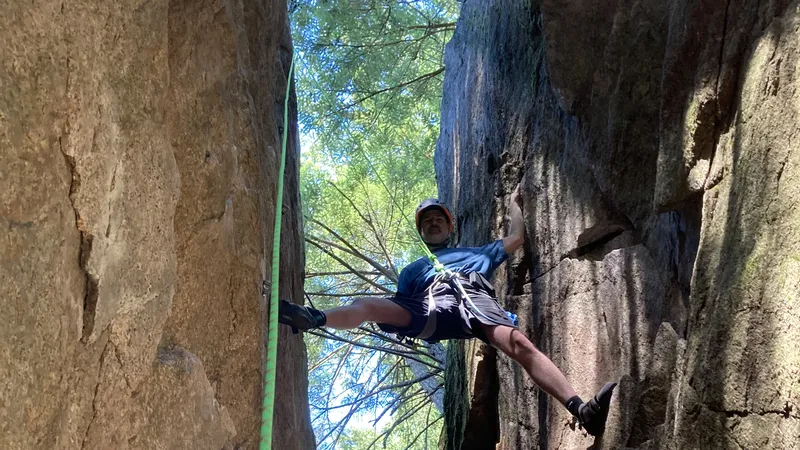
Why We Resist What Works
Movement, Mental Health, and the Nervous System's Need for Real Challenge
The granite at Smoke Bluffs holds the morning cold. We gather at the base of the route in the blue shadow of the rock face, a group of clinical supervisees and myself, ropes coiled, harnesses laid …
Essentials of Trauma-informed Practice
Considerations for recovery, healing, and well-being
Trauma is an experience that exceeds our ability to manage stress. Clinically, it disrupts containment: we lose our capacity for self-regulation, become drawn into instinctive coping, and often rem…

Working with Grief, Trauma, and Related Challenges
Museums Offer Much Potential for Healing Work — But Safety Must be a Primary Concern
Adapted from Museum Objects, Health and Healing , by Brenda Cowan, Ross Laird, and Jason McKeown. New and powerful museum exhibition trends include a greater focus on emotional engagemen…