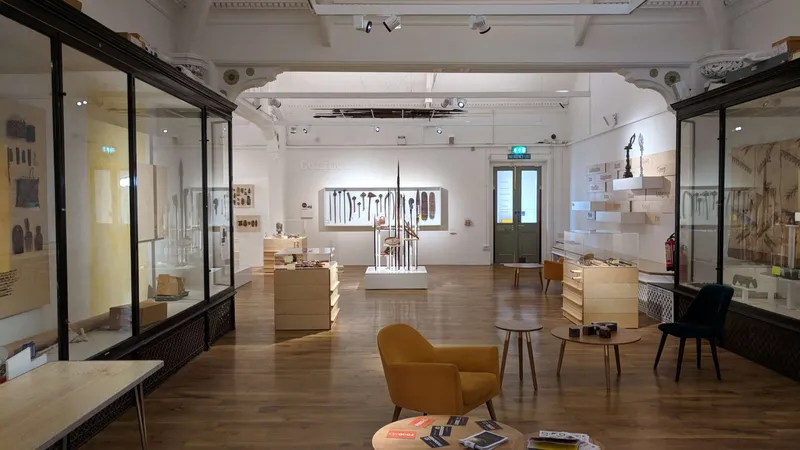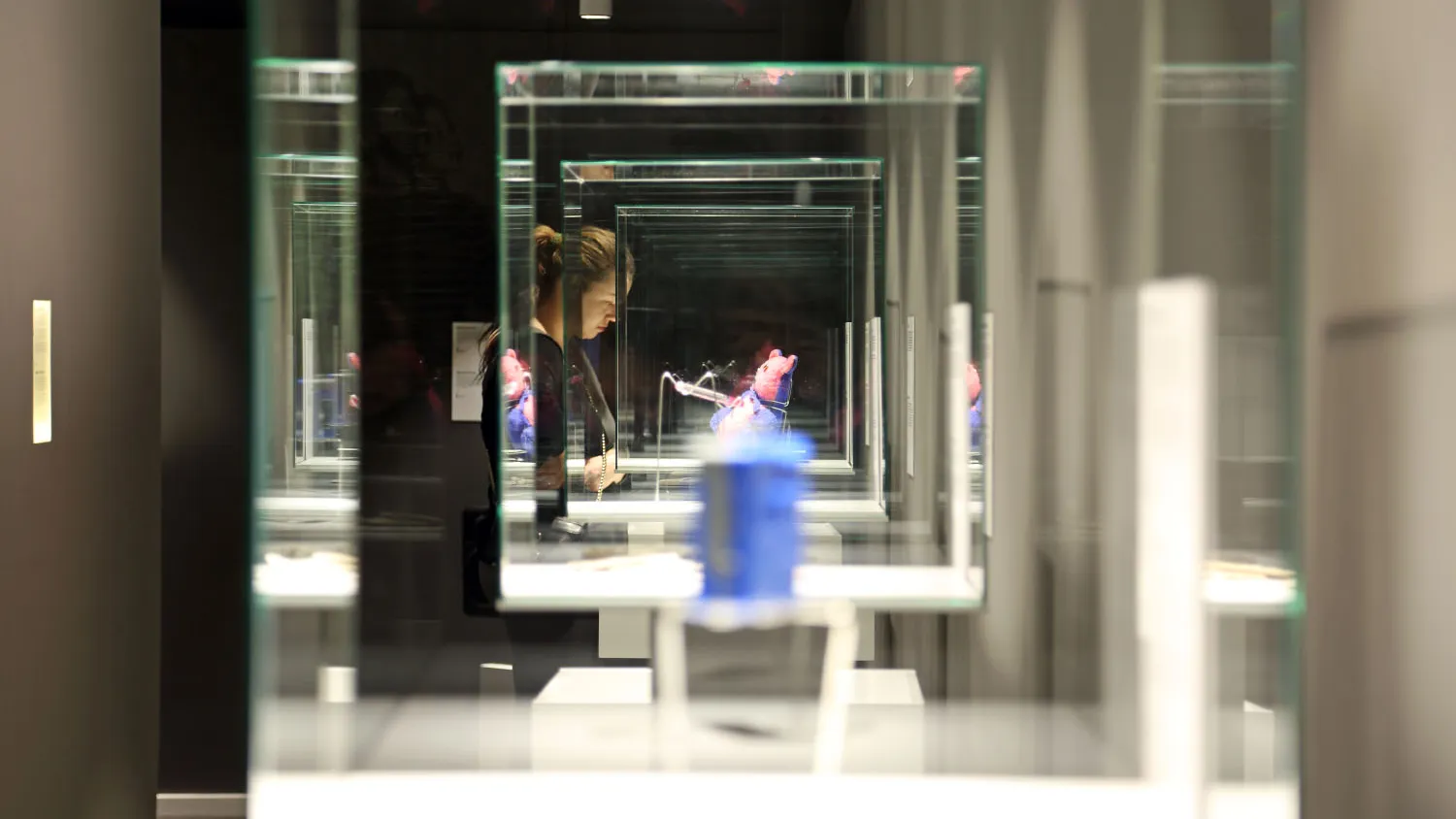
Museums dealing with difficult content carry a dual mandate: to present challenging material with honesty and accuracy, and to do so in ways that respect the emotional well-being of visitors. This balance is not simple. Exhibitions about genocide, systemic racism, or residential schools cannot be softened without compromising truth, yet they must be approached with sensitivity to avoid retraumatization. The goal is not to eliminate discomfort but to ensure that discomfort does not overwhelm. A trauma-informed approach seeks to create conditions where visitors can encounter difficult truths while still feeling supported, safe, and respected.
Architecture and Spatial Design
Museum architecture shapes the visitor experience in powerful ways. The physical journey through galleries—linear or meandering, ascending or descending, enclosed or open—creates emotional resonance beyond the content itself. Many museums present difficult content along a prescribed path, often building toward a hopeful conclusion: emergence from darkness into light, from despair toward hope.
This is a powerful narrative structure. And yet, in practice, many visitors never complete prescribed journeys through difficult content. The intensity of trauma narratives, exhibition after exhibition, without respite or release, becomes too much. They leave before reaching the intended resolution.
This presents a challenge—and an opportunity. What if architectural metaphors could be reimagined, not as single prescribed paths but as invitations to choose? What if visitors could decide, from the outset, how they wish to navigate the terrain?
Multiple Pathways Through Difficult Content
Some visitors might choose conventional paths: beginning at the entrance and moving through galleries in sequence. They trust that if they can endure the difficulty, something meaningful awaits at the journey’s end. This is the path of hope deferred, of faith in eventual emergence.
But others might choose differently. What if they could begin with context and hope, then move into more difficult material with that foundation already established? This reversal changes the journey’s meaning. It becomes not about escaping darkness toward a distant hope but about carrying understanding and resilience into the encounter with difficulty.
There’s also value in integrating both approaches. A visitor could encounter hopeful or contextualizing material, then move into difficult content, then return to reflective spaces. The journey inward and outward winds through the same territory, but the visitor is changed by each passage.
Integrating Creative Exploration
Visitors could be invited to engage creatively as they move through the museum. Imagine stations along pathways where visitors—especially children, but not only children—pause to participate in simple making activities. These need not be elaborate: arranging stones into cairns, writing words on paper and placing them in a collective bowl, adding beads to a communal string. The act of making engages the hand, which in turn engages the heart and the nervous system in ways that passive observation cannot.
Creating something meaningful—even something simple—offers a counterpoint to narratives of destruction. It reminds visitors that humans are not only capable of terrible harm but also of creativity, care, and connection. For children especially, tactile engagement provides entry points that abstract verbal presentations cannot.
Labyrinths, Dark Forests, and Guides in the Darkness
Cultural and artistic traditions across the world speak to the journey through difficulty. The labyrinth is not a maze designed to disorient but a single winding path that leads to a center—a place of stillness, integration, perhaps transformation. The labyrinth acknowledges that the journey through difficult territory is not linear. We double back, we circle, we feel lost even when we are on the path. But there is always a center, and there is always a way out.
The dark forest appears in myth and fairy tale as the place where the hero confronts the unknown. Dante’s Inferno begins “in a dark wood, for the straight way was lost.” Psychologist Clarissa Pinkola Estés speaks of the forest as the place where we meet the parts of ourselves we have disowned or feared. The monsters we encounter there are often aspects of our own shadow, waiting to be recognized and integrated. Trauma works this way too: the wound carries wisdom, if we can bear to look at it.
Guides in the darkness—Virgil leading Dante, shamans accompanying initiates, the wise woman at the edge of the forest—offer presence without rescue. They do not make the journey for us, but they walk beside us. They carry their own light, steady and calm, and in that steadiness we find the courage to continue. Museum staff, in a trauma-informed practice, play this role: companions who can hold space, who can say I see you are struggling, and I am here.
This approach also honors the reality that not everyone processes trauma through language and cognition. Some people need movement, touch, rhythm, making. The hand knows things the mind does not. Working with objects—arranging stones, folding paper, tying string—engages a different kind of intelligence, one that is somatic and intuitive. This is why art therapy and wilderness therapy have such power in trauma recovery. The body, given something to do, begins to regulate itself. The hands, given materials to shape, find expression for what cannot be spoken.
Balancing Truth and Hope
Exhibitions must balance narratives of harm with narratives of resilience. For every story of oppression, visitors should encounter stories of survival, resistance, or cultural continuity. This balance does not erase pain but situates it within the larger human capacity for endurance and creativity.
Some histories are dominated by loss, and curators may fear diluting truth with false positivity. The challenge is to avoid “redemptive arcs” that minimize harm or suggest easy resolution. Real trauma does not resolve neatly. Real injustice is not always followed by justice. And yet, even in the most brutal histories, people found ways to survive, to preserve culture, to resist, to retain their humanity. These stories deserve space too.
Many museums gesture toward this balance through architectural or narrative journeys from difficulty toward hope. But the risk is that visitors experience only darkness until the end—and many never reach the intended conclusion. What if hope were woven throughout? Not as denial of darkness but as acknowledgment that even in the darkest moments, people create beauty, tell stories, care for one another, hold onto hope.
Providing Options and Choice
One of the most effective strategies is to give visitors choice in how they engage. Exhibitions should offer multiple pathways, including alternate routes, visible exits, and clearly marked areas where visitors can pause or bypass difficult material. Content advisories at the start of galleries provide information so visitors can make informed decisions.
Most museum architectures present constraints: linear pathways, limited exits, prescribed sequences. But even within constraints, choice is possible. Visitors could be encouraged to pause at benches, alcoves, or reflection spaces—not as afterthoughts but as integral parts of the journey. They could be offered alternate routes or the option to skip particularly difficult sections. Even small gestures communicate respect for choice: signage that says You can take your time here or It’s okay to step outside for a break or This next section contains graphic images; you may choose to continue, pause, or skip ahead.
Choice returns agency to visitors. Trauma is, at its core, about loss of control. Trauma-informed practice seeks to restore control wherever possible, even in small ways. The visitor who can say I need to sit here for a moment or I’m going to skip this gallery and rejoin my group later is a visitor who retains some measure of autonomy in a space that could otherwise feel overwhelming.
The Role of Language
Language in text panels and interpretation carries great weight. It should be invitational: You may wish to reflect on… rather than prescriptive: You should recognize… Invitational language respects autonomy and acknowledges that visitors bring their own perspectives, their own histories, their own capacities for engagement.
Curatorial traditions have long favored authoritative tones. Museums positioned themselves as holders of knowledge, as experts who educate a less-informed public. But trauma-informed practice invites a shift: toward language that is accessible, open-ended, yet still accurate. Language that invites visitors into relationship with the content rather than positioning them as passive recipients. Language that acknowledges multiple truths, multiple perspectives, especially in consultation with affected communities.
For creative activities, language matters. A sign that says Complete this activity sounds like homework. A sign that says Pause here to reflect invites a different quality of engagement. A sign that says Take what you need. Leave what you wish. offers both guidance and openness. The phrasing shapes the experience.
Designing for Emotional Regulation
Visitors encountering traumatic content often need ways to regulate their emotions. Exhibitions should provide moments of sensory balance: quiet spaces, natural light, softer soundscapes, reflective installations. These are not escapes from content but opportunities for the nervous system to resettle before continuing.
Such features may be limited by budget or design priorities. Advocating for at least modest supports—benches, alcoves, tactile grounding objects—signals care and allows self-regulation. Even small design choices matter: a bench positioned near a window, an alcove with softer lighting, a textured surface visitors can touch. These elements help the nervous system resettle between moments of intensity.
Content Advisories and Framing
Content advisories are tools of respect. They should be clear, specific, and invitational: This section contains survivor testimony about violence. You may choose to continue, pause, or take an alternate route. This language acknowledges both the reality of what lies ahead and the visitor’s agency in deciding how to proceed.
The language of advisories matters deeply. While informing visitors that exhibition content may be emotionally activating, museums also face a secondary risk: warnings themselves can provoke emotions, and those emotions can be somewhat contagious. This is the band-aid effect: if you tell people something might hurt, it probably will. The middle ground is to inform without alarming, to give visitors options and reminders of their own capacity. Prior warnings work best when they emphasize self-regulation and resilience, reinforcing freedom of approach with judgment and self-awareness.
Words such as caution, warning, and stop! tend to increase anxiety and activation. Trigger warning is particularly problematic. Conversely, words such as remember, care, connect, and practice encourage visitors to apply the emotional skills that will assist them in navigating the current moment.
Preparedness for the possibility of strong emotion is essential whenever visitors enter an environment containing provocative material. Surprise is the enemy of calm. Surprised and emotionally activated visitors lose their self-regulation and often their ability to control basic behavior. The healthiest environment is one in which visitors are encouraged to be open to provocation but not corralled by it, facilitated toward emotional awareness but not overwhelmed. The duty of care is to stay within a range termed safe enough: uncomfortable, perhaps, even highly intensive and activating—but as long as visitors remain in control, as long as they are not hostage to dissociation, freezing, hypervigilance, or anger, they can usually navigate safely.
Advisories as Invitations to Engagement
Content advisories should not signal disengagement or avoidance. Rather, they are opportunities for deeper, more conscious engagement. When visitors encounter an advisory before entering a space, they are invited to pause, to take stock of their emotional state, to make an informed choice about how they wish to proceed. This pause—this moment of reflection—is itself a form of self-regulation. It allows visitors to gather their resources, to remember their own capacity, to decide whether they are ready for what lies ahead.
This differs fundamentally from the transactional model in which advisories simply warn visitors away. In a trauma-informed approach, advisories acknowledge that visitors may choose to encounter difficult content because it matters to them, because it connects to their own histories, because they want to bear witness. The advisory respects this choice while also preparing visitors for what that choice entails. It says: You can do this. Here’s what to expect. Here’s how to take care of yourself along the way.
What Research Shows
Recent research suggests that content advisories do not deter visitors from engaging with difficult material. Some studies indicate that well-crafted advisories may actually encourage engagement, particularly among visitors who have experienced trauma themselves. These visitors appreciate being given information that allows them to prepare, to make choices, to feel a sense of control over their experience. They are more likely to enter a space when they know what to expect and when they trust that the institution has thought carefully about their wellbeing.
A meta-analysis found that warnings do not reduce emotional distress or increase avoidance of difficult material (Bridgland et al., 2023). In some cases, warnings actually increased engagement—a “forbidden fruit” effect. These findings challenge the assumption that advisories will drive visitors away. Instead, they suggest that advisories—when done well—signal care, thoughtfulness, and respect.
Research with trauma survivors specifically has shown that traditional trigger warnings do not help people prepare emotionally for difficult content and may even increase anticipatory anxiety (Jones et al., 2020). However, this does not mean advisories are ineffective; rather, it highlights the importance of how they are framed. Warnings that emphasize external threat tend to heighten anxiety, while advisories that emphasize visitor agency and self-awareness create a different invitation entirely.
Recent studies exploring modified warning language with “therapeutically consistent messaging” to encourage adaptive coping have found similar results: warnings do not reduce distress, regardless of wording (Bell et al., 2025). What this suggests is that advisories alone—as standalone text—cannot prepare visitors emotionally. What is needed is a broader system of supports: trained staff, safe spaces, and opportunities for emotional processing and regulation.
Language That Centers Agency
Positive and helpful messages tend to have these features:
- Please take care of yourself
- You decide how deep to go
- If you need a break, take one
- You may (or may not) have strong reactions
- Your reactions are unique to you
- It’s OK to be emotional
- If you need help, ask a person you trust
- Participate and engage in your own way
- Learn and be safe
These phrases share several features. They use the language of choice and agency: you decide, you may choose, in your own way. They normalize emotional responses without prescribing what those responses should be. They acknowledge that not everyone will react the same way. They emphasize self-care without dictating how that care should look. And they remind visitors of resources—trusted people, breaks, options—without overwhelming them with information.
Importantly, these messages do not avoid naming what visitors might encounter. A content advisory should still be specific: This gallery contains testimonies about sexual violence. You may see graphic photographs. Some visitors find this material deeply affecting. Specificity allows visitors to make informed choices. But the specificity is paired with reminders of agency: You may choose to continue, pause, or take an alternate route.
The Need for Human Connection
Simply providing information about how to call a crisis line or where to find mental health resources is not generally helpful for visitors in moments of emotional activation. What is needed is engagement with museum staff who are trained in empathic responding. A phone number on a wall cannot offer what a present, calm, attentive person can offer: the stabilizing experience of being seen, heard, and met in one’s distress.
The skills of empathy and active listening require a blend of self-awareness and attentiveness to others. Emotional reciprocity and sharing are at the core of empathy, and its effective use has an inherently stabilizing function on almost everyone. Building skill in empathy also means developing the skill of self-regulation, which is also developed by therapeutic object interactions. In turn, empathy and self-regulation contribute to self-awareness.
This is why the presence of trained staff near potentially activating content is so important. A staff member standing near a difficult exhibit, calm and available, invites a different quality of experience than an empty room, however well-designed. That staff member becomes part of the advisory system—not through words but through presence. They signal: I am here. You are not alone. If you need support, I can offer it.
Museum staff can develop excellent skills in empathy and active listening. With training, they can learn to notice when a visitor is becoming activated, to offer simple grounding interventions, to guide someone to a quieter space or to a colleague who can provide additional support. The goal is not to turn all staff into therapists but to equip them with foundational skills to offer human connection in moments when it matters most.
Safe Spaces for Reflection
Content advisories work best when paired with safe—or safe enough—spaces where visitors can pause, reflect, and process what they have encountered. These are opportunities for the nervous system to resettle before continuing. Exhibitions should provide moments of sensory balance: quiet spaces, natural light, softer soundscapes, reflective installations.
Many museum buildings create natural pauses at landings, intersections, or transitional spaces. These could be intentionally designed as regulation spaces: places to sit, to breathe, to look out windows, to touch something textured or cool. Open, light-filled spaces function this way naturally—if visitors can reach them.
Creative engagement stations can also serve this purpose. Pausing to engage with tactile materials, to focus on a simple task—these actions help the nervous system downregulate after intense exposure. They provide a rhythm: encounter difficult content, pause and engage, continue onward, pause and engage again. The rhythm itself becomes regulating.
A safe space can be simple: a bench near a window, an alcove with softer lighting, a small side room with chairs and perhaps some natural elements—plants, wood, stone. What matters is that the space feels different from the intensity of the exhibition galleries. It offers sensory relief: quieter, slower, gentler. And it offers permission: It’s okay to be here. It’s okay to rest.
Signage can reinforce this: This is a place to pause. You can sit here as long as you need. Or: Take your time. There’s no rush. These small gestures communicate that the museum understands the need for regulation and respects visitors’ rhythms of engagement.
The Ecological View
When we think ecologically, we recognize that content advisories do not exist in isolation. They are part of a larger system that includes the physical environment, the presence and training of staff, the availability of safe spaces, and the overall culture of care within the institution. Each element affects the others. An advisory becomes more effective when visitors know that trained staff are nearby, when they can see visible exits and alternate routes, when they trust that the museum has thought carefully about their wellbeing.
From this perspective, a content advisory is not a warning sign posted at the entrance and then forgotten. It is an ongoing conversation between the museum and the visitor, mediated through multiple channels: signage, staff presence, spatial design, the rhythm of the exhibition itself. It says: We see you. We know this is difficult. We’ve tried to create conditions that support you in choosing how to engage.
Putting It into Practice
Advisories are often inconsistently applied or vaguely worded. Normalizing them as standard practice—so visitors expect them as a sign of care rather than avoidance—is the direction forward. Advisories could appear not only at gallery entrances but also at specific exhibits within galleries, giving visitors ongoing information. Digital guides or apps could allow visitors to preview content before entering a space, making more informed choices about pacing and exposure.
Consider a visitor approaching the residential schools exhibition. Before entering, they encounter an advisory panel. The language is specific but invitational: This gallery tells the stories of residential school survivors. You will see photographs, hear testimonies, and encounter objects that bear witness to trauma and loss. Some visitors find this material deeply affecting. You may experience strong emotions—sadness, anger, grief—and that is okay. Take your time. Rest when you need to. There are benches throughout the gallery and a quiet reflection space at the far end. Museum staff are here if you need support.
This advisory names what visitors will encounter, specifically and honestly. It normalizes emotional responses. It reminds visitors of their agency: Take your time. Rest when you need to. It points to resources: benches, a reflection space, staff. And it does all of this in language that is clear, direct, and grounded in care.
Inside the gallery, additional advisories might appear before particularly intense content: The next section contains survivor testimonies about physical and sexual abuse. You may choose to listen, to read the transcripts, or to move forward to the next area. Again, the language is specific and offers choice. It acknowledges the difficulty of the material while trusting visitors to know what they need.
Organizational Culture
For content advisories to function as tools of engagement rather than deterrence, they must be embedded within a broader organizational culture that values trauma-informed practice. This means training staff to understand the purpose of advisories and to embody the principles behind them. It means recognizing that advisories are expressions of care, not bureaucratic compliance measures. And it means continually revisiting and refining advisory language based on visitor feedback and staff experience.
Staff should be invited to contribute: What language works well for you? What do visitors ask about? What seems to help? Advisories should be living documents, revised regularly. And staff should be supported in their own emotional labor through supervision, peer support, and opportunities for reflection. Healthy organizational culture is the best protection against compassion fatigue. In such an environment, staff and volunteers communicate effectively, are aware of each other’s emotional status, and find many ways of supporting one another.
Content advisories, when done well, are acts of care that invite deeper engagement rather than avoidance. They prepare visitors by centering their agency, normalizing their responses, and reminding them of available supports. They work best when paired with trained staff and safe spaces. And they function most effectively when embedded within a trauma-informed culture that values visitor wellbeing as much as educational mission.
The goal is not to shield visitors from difficult material but to create conditions in which they can encounter that material with intention, awareness, and support. When visitors feel prepared, when they retain a sense of choice, when they know help is available—they are more likely to engage deeply, to stay present, to allow the content to affect them in ways that matter.
Testing and Feedback
Exhibition teams cannot anticipate every response. Exhibitions should be piloted with diverse audiences—staff, partners, community groups—before launch. Feedback can reveal unanticipated triggers or disorienting layouts. A seemingly minor design choice—the color of a wall, the proximity of certain artifacts, the pacing of narratives—can have a strong effect on visitor experience.
Timelines often prevent extensive piloting. Embedding feedback processes wherever feasible—even small-scale walkthroughs with colleagues or partners—is valuable. For any creative engagement activity, testing with actual visitors is essential. Do children engage with it? Do adults find it meaningful or trivializing? Does it interrupt the solemnity of the space in helpful or unhelpful ways? Only through testing can these questions be answered.
Collaboration with Community Voices
Trauma-informed planning benefits from collaboration with those whose stories are told. Community partners should be involved in shaping narrative arcs, reviewing text, and selecting artifacts. This is especially true for exhibitions dealing with residential schools, Indigenous histories, and ongoing struggles for justice.
Collaboration may be constrained by time or divergent perspectives within communities. Maintaining respectful, ongoing dialogue—even when it slows the process—strengthens trust and safety through inclusion. For any creative intervention, collaboration might mean asking community Elders or cultural leaders: Does this approach resonate? Does it honor or trivialize? What adjustments would make it more meaningful?
Constraints and Realities
Exhibition planning faces architectural, financial, and policy constraints. Trauma-informed features are often added late, when flexibility is limited. Integrating trauma-informed thinking at the earliest stages—when changes are more feasible—makes a real difference. This requires advocacy and awareness across all departments: design, curation, interpretation, visitor services, facilities.
Most museum buildings present real constraints. Architecture is fixed; pathways are largely determined. But within these constraints, much is still possible. Benches can be added. Lighting can be adjusted. Advisories can be installed. Staff can be trained to notice and respond. And creative interventions can be piloted on a small scale, refined, and expanded if they prove meaningful.
Scenarios
A residential school exhibition includes survivor testimony. This should be balanced with stories of cultural reclamation and resilience. Visitors could pause at a creative station where they engage with tactile materials—choosing colored papers, arranging stones, or adding to a collective weaving. The act of choosing, of creating something, offers a small counterbalance to the heaviness of the testimony.
A Holocaust gallery contains graphic images. Advisories and alternate routes should be offered. Architecture may limit options. But visitors could be invited to pause at a grounding station just before entering—a simple act that gives hands something to hold, something to focus on when the images become overwhelming.
A refugee displacement exhibit includes conflict sounds and video. Visitors should be prepared and nearby quiet space offered. A creative station here might include the prompt: What do you carry? What do you wish to leave behind? Visitors write or draw on small papers, fold them, place them in a collective vessel—a ritual of release before continuing.
Toward Trauma-Informed Design
Trauma-informed exhibition planning is not a checklist but an evolving process. Steady progress—asking with each project, How can we make this space safer, more empowering, and more supportive?—is what matters. By embedding choice, balance, respectful language, regulation spaces, advisories, piloting, collaboration, and creative engagement, museums can become places of both truth-telling and healing.
And perhaps, in the end, this is what trauma-informed practice in museums aspires to: ensuring that no one moves through difficulty alone, unsupported, without resources for making meaning of their own experience.
If I must cross the sea, I will cross the sea. If not, I will wander in unknown places, seeking.
This page is part of the Trauma-Informed Museum Practices Guide